
Owning a pool should feel like a luxury, not a chemistry exam. Yet many pool owners find themselves staring at shelves of products, wondering which ones actually matter and which are just extras. The reality is that clear, safe water doesn’t require dozens of products—it requires the right swimming pool chemicals, used with purpose.
When you understand what each chemical is responsible for and how they work together, pool care becomes far more predictable and far less frustrating. Problems like cloudy water, algae blooms, and eye irritation usually aren’t caused by “bad water,” but by missing or misused chemicals.
This guide breaks down the essential chemicals for pools, explains the role each one plays, and shows how they fit into a simple, repeatable routine. Whether you own an in-ground pool or are managing above ground pool chemicals, this article gives you a clear foundation for confident pool care.
To start, it helps to understand the small group of chemicals every pool depends on—because once those are in balance, everything else becomes easier to manage.
Pool water is constantly under attack, even when no one is swimming. Every dip introduces sweat, sunscreen, cosmetics, and body oils. Wind carries in dust and pollen. Rain adds organic debris. On top of that, sunlight actively breaks down sanitizer throughout the day.
Without the right chemicals in a swimming pool, water can shift from clear to problematic faster than most owners expect.
What makes this tricky is that many water issues aren’t immediately visible.
A pool can look fine while sanitizer levels are too low or pH is drifting out of range, creating conditions that allow bacteria and algae to take hold. The Centers for Disease Control and Prevention notes that improper pool chemistry is a leading contributor to recreational water illnesses, as well as eye and skin irritation among swimmers
This is why relying on reaction alone—waiting until water turns cloudy or green—often leads to bigger, more expensive problems. A consistent chemical routine keeps water safe, protects equipment, and prevents issues before they start, which is far easier than trying to correct them after the fact.
Pool chemistry works best when you think of it as a system, not a collection of random products.
Every pool relies on three core functions working together: sanitation to keep water safe, balance to keep it comfortable and efficient, and stability to prevent problems from developing in the first place. When one of these breaks down, the others struggle to keep up.
Sanitizer is what actually makes pool water safe to swim in. It kills bacteria, viruses, and other harmful contaminants introduced by swimmers, debris, and the environment. Without an effective sanitizer, a pool can look clear while still posing health risks.
The most common sanitizer options include
Chlorine remains the most widely used choice because it’s effective, affordable, and adaptable to many pool types. It also serves as the backbone for many pool cleaning chemicals, including shock treatments. If sanitizer levels drop too low, even a crystal-clear pool can quickly become unsafe, which is why consistent testing and dosing are critical.
pH measures how acidic or basic your pool water is, and swimmers tend to feel pH issues immediately. When pH drifts out of range, comfort and water clarity suffer, and sanitizer becomes less effective.
Signs that pH is off often include
pH is adjusted using
Keeping pH in range improves swimmer comfort and allows every other swimming pool chemical to work as intended, reducing the need for excessive chemical use.
Total alkalinity plays a quieter but equally important role. It acts as a buffer that keeps pH from swinging too quickly. When alkalinity is too low, pH becomes difficult to control and can fluctuate daily, making pool care frustrating and inconsistent.
Alkalinity is typically adjusted with baking soda–based products. One key rule of pool chemistry is to always correct total alkalinity before fine-tuning pH. Once alkalinity is stable, pH adjustments become smaller, more predictable, and easier to maintain.
Together, these three elements form the foundation of reliable pool water care. When they’re in balance, preventing algae, cloudiness, and irritation becomes far easier than trying to fix problems after they appear.
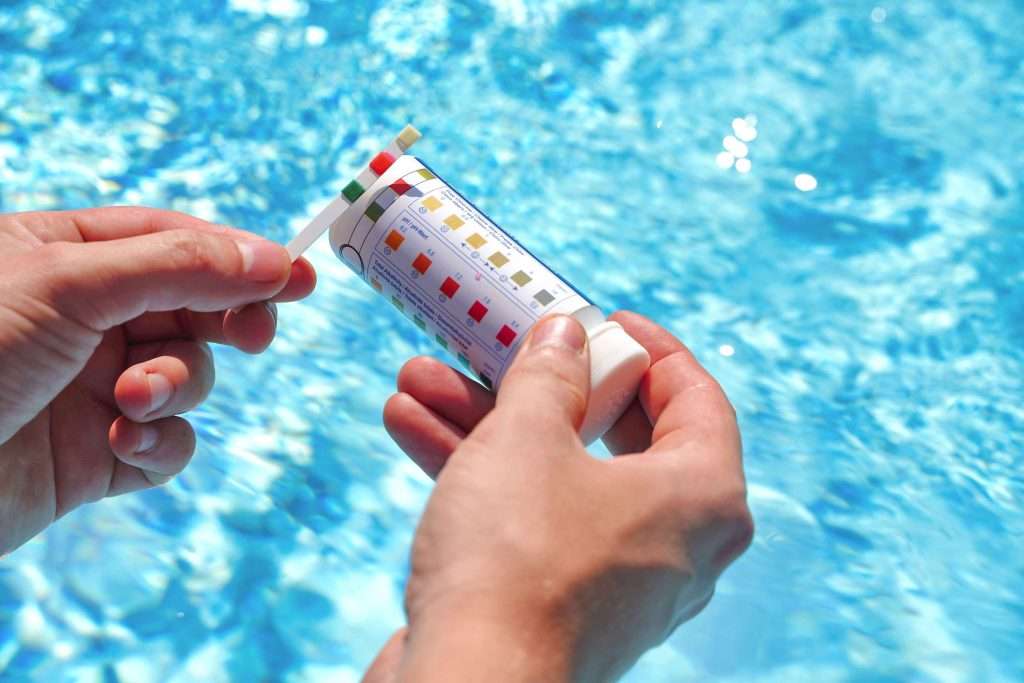
You can’t guess your way through chemicals for pools. Water that looks clear can still be out of balance, and adding the wrong product without testing often makes problems worse instead of better. Regular testing tells you exactly what your pool needs and prevents unnecessary chemical use.
A reliable pool chemical test kit should measure
Most residential pools benefit from testing two to three times per week, with full test panels completed weekly during heavy use, extreme heat, or frequent storms. More frequent testing allows for smaller adjustments and helps prevent water issues from escalating.
Farmers Pool & Spa offers professional water testing that often identifies imbalances early, helping pool owners correct small issues before they turn into cloudy water, algae growth, or equipment damage.
Pool shock is one of the most talked-about swimming pool chemicals, but it’s also one of the most misunderstood. Many pool owners know they’re supposed to shock their pool, yet aren’t entirely sure why, how, or how often it should be done. Understanding the role of shock makes it far easier to use it correctly and avoid overcorrecting water problems.
At its core, pool shock is a high-dose chemical treatment designed to quickly restore water quality. Instead of maintaining everyday sanitation, shock targets the buildup that regular chlorine levels can’t handle on their own.
So what does pool shock do in practical terms? It
This process is commonly referred to as shocking a pool or shock treating a pool, and it plays a key role in keeping water fresh and safe between routine maintenance cycles.
There is no single best pool shock for every situation. The right choice depends on your pool’s chemistry, how quickly you need results, and how much downtime you can allow.
Common options include
Each type has a place in a well-rounded pool care plan. Choosing the right one helps prevent unnecessary side effects, like overstabilization or extended swim downtime.
When learning how to shock a pool, preparation is just as important as the product itself. Poor timing or skipped steps can reduce effectiveness.
General best practices include
If visible algae is present, pool shock treatment should be combined with thorough brushing and continuous filtration to remove dead algae and prevent regrowth.
How often you should shock your pool depends on usage, weather, and water conditions. Shock isn’t just for visible problems—it’s also a preventive tool.
Most pools benefit from shocking
Smaller pools and above-ground systems often require more frequent shocking because their water chemistry changes faster.
How long to wait after shocking pool water varies based on the product and dosage used. Always follow label instructions, but swimming is generally safe once sanitizer levels return to the recommended range and the water is clear.
Testing before swimming is the safest way to confirm that shock treatment has fully dissipated and the pool is ready for use.

Algae is one of the most common and frustrating pool problems, which is why algaecide often gets misunderstood. While it’s an important part of pool care, it works best as a preventive tool, not a cure-all.
A pool algaecide helps prevent algae growth and slows its ability to spread. It supports your sanitizer by making the environment less favorable for algae, but it does not replace proper chlorine levels or shock treatments.
When used correctly, algaecide for pools is especially helpful during warm weather, periods of heavy use, or in pools with a history of recurring algae.
Different algae problems call for different solutions. Common options include
Choosing the best algaecide for pools depends on your pool surface, water source, and previous algae issues. This is one area where professional guidance can prevent trial-and-error mistakes. Farmers Pool & Spa can help match the right product to your specific pool conditions.
Swimming pool algaecide is most effective when used proactively, not reactively. It’s typically added
Used this way, algaecide becomes an extra layer of protection rather than a last-ditch fix.
Beyond the core chemicals, most pools eventually need additional chemicals for pools to stay clear and balanced. These products help address specific issues and fine-tune overall water quality.
Common supporting chemicals include
“All in one” pool chemicals can seem convenient, but they often make precise balancing more difficult if you don’t know exactly what your pool needs at the moment.
For a deep dive into Summer pool care, visit our Mid-Summer Pool Care Guide which includes great tips on how to stop algae and chlorine loss in the Summer heat.
The chemistry behind pool care doesn’t change for above-ground pools, but the margin for error is smaller. Chemicals for above ground pool maintenance require more precision because lower water volumes can shift quickly, and vinyl liners need proper product dilution.
Above-ground pool owners should be especially careful about
Using a properly sized pool chemical kit helps keep dosing accurate and maintenance manageable.
Pool chemicals should always be handled and stored with care to protect people, property, and the products themselves.
Key safety reminders include
Safe handling habits protect your pool, your equipment, and everyone who uses them.
Crystal-clear water doesn’t happen by accident. It’s the result of understanding swimming pool chemicals, testing consistently, and using the right products at the right time.
At Farmers Pool & Spa, we do more than sell pool chemicals. We help pool owners understand their water, solve problems faster, and enjoy their pool with confidence. From free water testing (for chemical clients) to expert guidance on shock, algaecide, and complete pool chemical kits, our team is here to make pool care simpler and more reliable.
Stop guessing and start swimming. Visit Farmers Pool & Spa today and let our experts help you build a chemistry routine that actually works.
At minimum, every pool needs a sanitizer, pH control chemicals, alkalinity increaser, and pool shock. Many pools also benefit from algaecide, stabilizer, and clarifier depending on conditions.
Pool shock oxidizes contaminants, removes chloramines, restores sanitizer effectiveness, and helps clear cloudy water or early algae growth.
Most pools should be shocked weekly during swim season and after heavy use, storms, or water quality issues.
Wait until sanitizer levels return to the recommended range and the water is clear. This can vary by product and dosage.
The best option depends on your pool surface, water source, and algae history. Polyquat algaecides are popular for prevention, while stronger formulas may be needed for persistent problems.
As a family-owned and operated company, Farmer’s Pool & Spa embraces traditional values and we place our customers first.
