
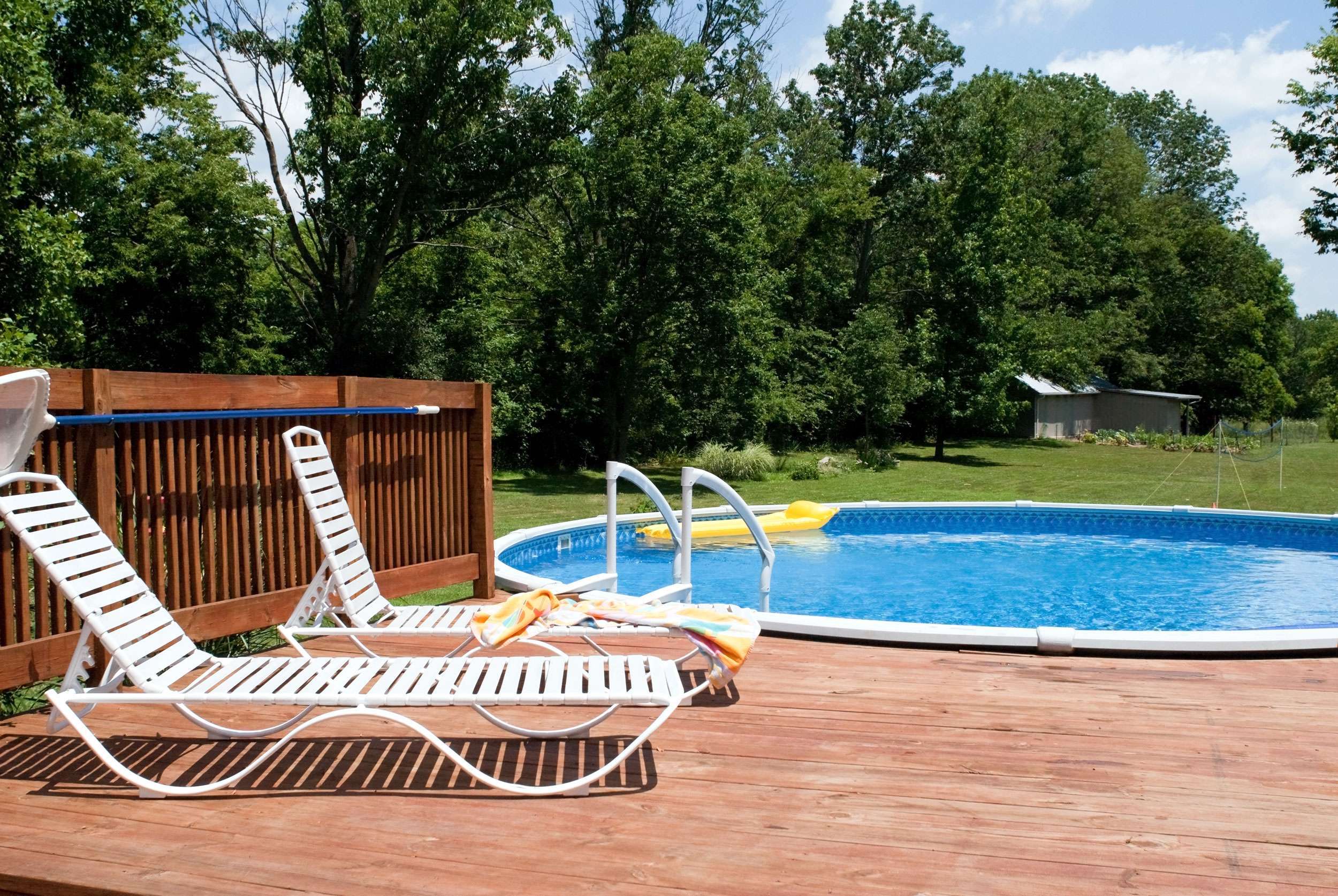
Above ground pools have come a long way. What was once considered a temporary or budget compromise has become a legitimate, long-term backyard investment that families across Missouri are choosing on purpose, not just by default. Lower upfront costs, faster installation, and a surprisingly wide range of sizes and styles have made above ground swimming pools one of the most searched pool categories in the country, and for good reason.
This guide walks you through everything you need to know before you buy: how to choose the right size for your yard and family, what installation actually involves, how to build a deck that makes your pool look like it belongs, and which accessories are worth the money.
Whether you’re just starting your research or ready to pull the trigger, here’s how to get it right.
The appeal is straightforward. Above ground pools cost significantly less than in-ground options, can be installed in a fraction of the time, and don’t require excavation or major landscaping disruption.
For homeowners who want a real swimming experience without a six-figure commitment, above ground pools are hard to beat. They’re also a strong option for renters with property permission, families with younger children who want something manageable, and anyone who wants to enjoy their summer without a multi-year construction timeline.
That said, above ground isn’t the right fit for everyone. If you’re looking for something permanent with a custom shape and a higher-end finish, Farmer’s also offers in-ground fiberglass pools from Latham and Imagine, two of the most trusted names in the industry. But if your priority is getting in the water this summer without a major construction project, above ground is where to start.
Choosing the right size is the most important decision you’ll make, and it comes down to three things:
Above ground pool sizes are typically described in diameter (for round pools) or by length and width (for oval and rectangular shapes). Common round sizes run from 12 feet up to 33 feet in diameter. Oval pools, which are ideal for longer swimming and tighter yard footprints, typically range from 12×24 feet to 18×40 feet.
A 15-foot round pool holds roughly 5,000 gallons and works well for households with young children or limited space. Step up to a 24-foot round and you’re looking at around 13,500 gallons with enough room for a few adults to swim comfortably. If you have the space and want something closer to a true swimming experience, a 27- or 30-foot round, or an oval in the 18×33 range, gives you real lap room.
Before finalizing a size, walk your yard. Account for the pool itself plus at least two feet of clearance on all sides for access and maintenance. If you’re planning an above ground pool deck, build that into your space planning now rather than after the fact.
Above ground pool cost varies widely based on size, wall material, liner quality, and what’s included in the package. Here’s a realistic breakdown.
Entry-level pools with steel walls, standard liners, and a basic pump and filter package typically run $1,000 to $2,500 for the pool itself. Mid-tier options with heavier-gauge steel, better liner patterns, and upgraded filtration land in the $2,500 to $5,000 range. Premium above ground swimming pools with full resin or hybrid construction, thicker liners, and high-capacity filtration run $5,000 to $8,000 or more before accessories and installation.
Pricing for above ground swimming pools also shifts based on what’s bundled in. Some packages include everything; others price the pump, filter, and liner separately. Always confirm what’s in the box before comparing quotes.
Above ground pool installation adds to the total. Professional installation typically runs $1,000 to $3,000 depending on yard conditions, pool size, and regional labor rates. Factor in site prep if your yard isn’t already level, and account for electrical work if you’re adding a heater or upgraded pump.
Financing is available through Farmer’s Pool & Spas via Lyon Financial, which makes it easier to get into the right pool without compromising on quality to fit a tighter budget.
Installing an above ground pool is not a casual weekend project, even though it’s often marketed that way.
The process involves site selection, ground leveling, base material prep, wall panel assembly, liner placement, and plumbing connections. A pool installed on uneven ground, or over soil that wasn’t properly compacted, will develop liner stress and structural problems that shorten its lifespan significantly.
Professional above ground pool installation removes those risks. A qualified installer handles the site assessment, brings the right equipment, and ensures the pool is level and structurally sound before water goes in. They’ll also handle utility clearance checks and confirm the pool placement doesn’t conflict with underground lines or drainage patterns.
DIY installation is absolutely doable under the right conditions, but there is a lot to consider, so getting a professional opinion never hurts. Flat yards with good soil and easy access are the friendliest starting point, but there is still a great deal to manage if you’ve never installed a pool before.
If your yard has slopes, clay-heavy soil, or tight access points, professional installation is worth the investment for the peace of mind alone. A properly installed pool is also far less likely to develop mid-season problems that force an early close, which is the last thing anyone wants in the middle of a Missouri summer.
A well-designed deck transforms the look and function of an above ground pool. It eliminates the awkward ladder climb, adds usable outdoor living space, and visually integrates the pool into your backyard rather than leaving it looking dropped in place.
The most popular above ground pool deck ideas fall into two categories: freestanding decks and wraparound decks. A freestanding entry deck gives you a platform at pool height on one side, often with integrated seating or railing, and is the more budget-friendly option. Wraparound decks surround part or all of the pool, creating a resort-style appearance that significantly increases usable outdoor space.
For materials, pressure-treated lumber is the most common choice because of its cost and availability, but composite decking is worth the premium for anyone who wants low maintenance and long-term durability.
One thing many homeowners don’t think about until it’s too late is local permitting and building codes. Depending on your municipality, a deck attached to or built around a pool may require a building permit, need to meet specific railing height requirements, or fall under fencing ordinances designed to restrict pool access. A professional installer knows the local codes and handles the permitting process, so you’re not caught off guard after the build is done.
Above ground pool and deck ideas work best when they’re planned together. The deck height, entry point, and rail placement all depend on the pool’s wall height, so locking in your pool choice before designing the deck saves rework. If you want help thinking through a configuration that fits your yard, the team at Farmer’s can walk you through compatible setups.
Landscaping is where above ground pools go from functional to genuinely beautiful. The right choices reduce maintenance headaches and make the whole setup look intentional.
For privacy, ornamental grasses, arborvitae, or tall ornamental shrubs planted around the perimeter block sightlines without creating a maintenance burden. Avoid plants with aggressive root systems or plants that drop a lot of debris near the water.
Ground cover around the pool base is worth thinking through carefully. Grass is fine if you’re committed to keeping it trimmed; long grass near the pool base traps moisture and accelerates rust on steel wall pools. River rock, pea gravel, or rubber mulch are lower-maintenance alternatives that also improve drainage. Pavers are popular for creating a defined walkway from the house to the pool entry.
Above ground pool landscaping ideas that incorporate low-maintenance flowering plants, defined borders, and simple lighting can make a modest setup look like a premium backyard feature.
Once the pool is in, the right above ground pool accessories make it safer, more enjoyable, and easier to maintain. Here’s how to think through them.
An above ground pool ladder is non-negotiable, and the quality of the ladder matters more than most buyers expect. Look for a removable, locking ladder that can be secured when the pool isn’t in use, which limits unauthorized access by young children. Pool safety nets and alarms add another layer for households with small kids.
An above ground pool slide sized appropriately for your pool and wall height is one of the most popular upgrades for families with children. Make sure any slide you choose is rated for your pool’s wall height and has proper safety rails. Beyond slides, quality floats and loungers make a big difference in how much the pool actually gets used.
A dedicated above ground pool cleaner keeps the floor and walls clear between manual cleanings. Suction-side cleaners are the most common and most affordable option for above ground swimming pools. Robotic cleaners offer more convenience but at a higher price point. Alongside a cleaner, a good skimmer net, a wall brush, a water test kit, and a chemical dispenser cover the basics of routine upkeep. Farmer’s Pool & Spas carries chemicals and accessories in-store and online to keep you stocked throughout the season.
Consistent above ground pool upkeep is what separates a pool that lasts 15 years from one that deteriorates in five. The routine isn’t complicated, but it has to be consistent.
Weekly, you should be testing and balancing water chemistry, running the filter at least 8 hours per day, skimming the surface, and brushing the walls and floor. Shocking the pool every one to two weeks during heavy use keeps algae from gaining a foothold.
If you’re new to managing pool chemistry, our Swimming Pool Chemicals 101 guide breaks down exactly which chemicals you need and what each one does. For a broader look at seasonal care from opening day through the end of summer, Pool Maintenance Made Easy is a good place to start.
Draining should happen deliberately, not as a first response to chemistry problems. For seasonal closing in Missouri, partial draining is typical; you don’t need to fully empty most above ground pools for winter. When a full drain is necessary for liner replacement or repair, use a submersible pump to pull water out gradually, and never leave a vinyl liner completely dry for extended periods. Dry liners shrink and crack.
Winterizing is one of the most important maintenance steps for Missouri pool owners, and skipping it or doing it halfway leads to damaged equipment and shortened liner life. The process involves balancing chemistry, shocking the water, adding a winter algaecide, blowing out and plugging the return and skimmer lines, removing and storing the pump and filter indoors, and securing a winter cover over the pool.
Winterizing correctly also means lowering the water level slightly below the return jets and making sure the cover is secured tightly enough to handle wind without pooling water on top. Farmer’s offers professional pool closings if you’d rather hand this off to someone who does it every day.
Above ground pools are one of the best value decisions you can make for your backyard. With the right size, a well-planned deck, and a solid maintenance routine, they deliver years of use without the commitment or cost of in-ground construction.
At Farmer’s Pool & Spas in Cape Girardeau and Perryville, we carry Trevi above ground pools, one of the most respected names in the industry with over 50 years of manufacturing experience. Our team can help you find the right fit for your yard, your family, and your budget. Stop in during business hours, give us a call at (573) 334-4707, or request a free in-home consultation online.
The best above ground pools for families balance size, durability, and ease of maintenance. For most families with children, a 24-foot round or an 18×33 oval offers enough room to swim, play, and float comfortably. Trevi pools, which Farmer’s carries exclusively, are a strong choice for family use due to their heavy-gauge construction and quality liner standards.
Total cost of above ground pool ownership, including the pool, professional installation, and basic accessories, typically lands between $3,000 and $10,000 for most homeowners. Pool size, wall material, and site conditions are the biggest variables. Financing through Lyon Financial is available at Farmer’s Pool & Spas.
A 15- to 18-foot round pool suits small yards or households with young children. Families who want real swimming room should look at 24-foot rounds or larger. Oval pools are the best option when you want length for swimming but have a narrower yard footprint.
Above ground pool upkeep is manageable with a consistent weekly routine. Water chemistry, filtration, and surface cleaning take around 30 minutes per week under normal conditions. Seasonal tasks like opening, closing, and winterizing add a few hours per year.
Yes, and it’s one of the best upgrades you can make. Above ground pool deck ideas range from simple entry platforms to full wraparound structures. Plan the deck alongside the pool selection so the wall height and entry point align correctly.
Winterizing in Missouri involves balancing chemistry, adding winterizing chemicals, draining equipment, plugging lines, and securing a winter cover. The process should be completed before overnight temperatures consistently drop below freezing. Farmer’s Pool & Spas offers professional pool closing services if you prefer expert handling.
As a family-owned and operated company, Farmer’s Pool & Spa embraces traditional values and we place our customers first.
